What is ASO? App Store Optimization explained
App Store Optimization (ASO) is the targeted optimization of your app's presence in the Apple App Store. It determines whether users find your app at all – and whether it convinces them to download. In the age of AI-generated apps, ASO is becoming the decisive success factor.
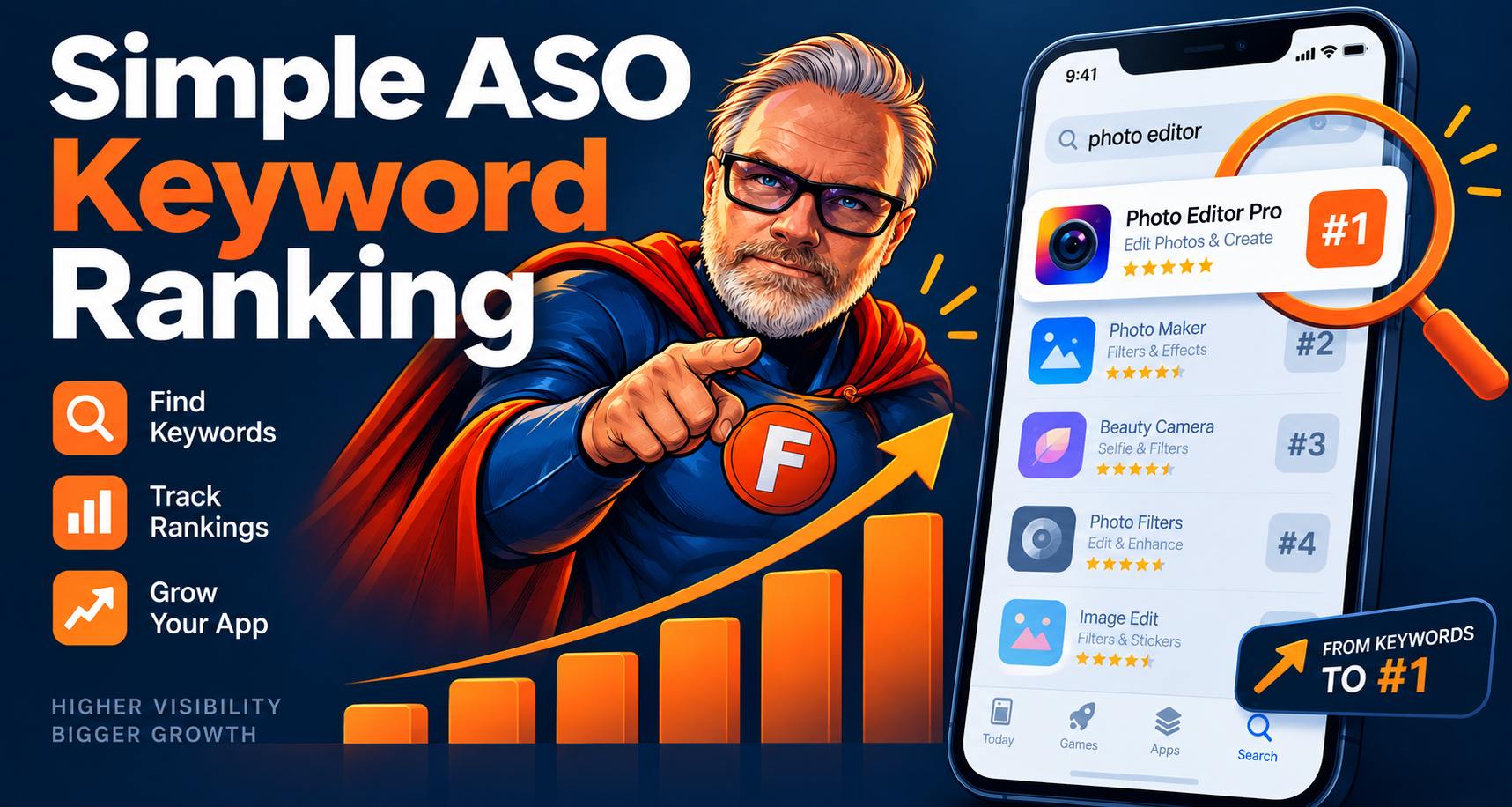
ASO definition: What does App Store Optimization mean?
App Store Optimization (ASO for short) is the targeted optimization of an app's presence within an app store to increase visibility in organic search and generate more qualified downloads. The focus is on the Apple App Store for iOS apps, but the same principles largely apply to the Google Play Store as well.
Unlike paid user acquisition (Apple Search Ads, social ads), ASO aims for sustainable, organic reach. Anyone ranked in the top 10 for relevant keywords is found every day by potential users without ongoing costs per click.
ASO combines two disciplines: search engine optimization within the store (ranking ASO) and conversion rate optimization on the product detail page (conversion ASO). Both sides directly influence each other: good visibility is useless if the icon, screenshots, and description don't convince users to download.
Why ASO is becoming increasingly important
The mobile app market is already saturated. Millions of apps compete for users' limited attention. At the same time, the efficiency of classic paid channels is declining: advertising costs are rising, tracking capabilities are being restricted by privacy rules, and organic reach on social networks is decreasing.
In this environment, the App Store itself becomes the most important acquisition source. Users actively searching for terms like "meditation," "fitness tracker," or "budget planner" show a high intent signal – they are already looking for a solution. ASO is the key to reaching exactly these high-value users.
But the game has changed. The introduction of generative AI tools has drastically lowered the barrier to app development. What used to take months or years can now be done in days. This leads to an unprecedented flood of new apps all fighting for the same keywords and visibility.
The flood of AI-generated apps in the App Store
Artificial intelligence is fundamentally changing app development. No-code platforms, AI-powered code generators, and automated design tools make it possible to create apps with minimal effort. For users this is often an advantage – for established publishers and indie developers, however, it means a new dimension of competition.
The result: the App Store is filling up with a growing number of similar apps. Many differ little in functionality or target audience. The decisive differentiating factor therefore becomes visibility. Those who don't practice targeted ASO sink into the mass and lose organic downloads even when their product is qualitatively better.
At the same time, AI tools are also being used for ASO itself: from keyword research and generating app descriptions to analyzing competitor screenshots. Those who don't understand ASO as a strategic part of their app distribution strategy quickly fall behind.
"ASO is no longer a nice-to-have today – it is the decisive competitive advantage in an AI-driven app market.
The core ASO factors at a glance
The Apple App Store uses a complex ranking algorithm. Although Apple doesn't publish the exact weightings, the most important factors can be derived from observations and tests:
App Name & Subtitle
The app name is the strongest textual ranking factor. Up to 30 characters are available and should contain the brand name plus main keyword. The subtitle (up to 30 characters) adds secondary keywords.
Keywords field
The 100-character keywords field can hold relevant search terms that don't need to appear in visible text.
Description & localized text
According to Apple, the description itself is not used for ranking, but it influences conversion and indirectly keyword relevance through local variants.
Screenshots & app preview
Visual assets are crucial for conversion rate. The first three screenshots must communicate the app's benefit within seconds.
Ratings & reviews
Quantity and average of ratings signal quality and trust. Apps with more and better ratings are shown preferentially and convert better.
Conversion rate
How many searchers click on the app and download it? A high conversion rate confirms to the algorithm the relevance for the keyword.
Freshness & engagement
Regular updates, low crash rates, and high usage duration are quality signals that strengthen long-term ranking.
Keyword research: the foundation of every ASO strategy
Every successful ASO campaign starts with solid keyword research. The goal is to identify terms that are both searched by the target audience and realistically rankable.
A good keyword set consists of a mix of high-volume terms (high visibility, high competition), mid-tail keywords (good volume, moderate competition), and long-tail keywords (lower volume, high conversion probability).
Besides pure search volume, competitive strength plays a role. Terms dominated by established apps with thousands of ratings are hardly reachable for new apps. It pays to look for niches or occupy local markets early.
Conversion optimization: from visibility to download
Ranking alone is not enough. Once a user sees the app in search results, they decide within seconds whether to tap the listing. On the product detail page, you again have only seconds to build trust and lead to a download.
The most important levers are: a professional, recognizable app icon, screenshots with clear value propositions, a compelling first description line, and a well-crafted app preview. Every element must be understandable and emotionally appealing to the target audience.
A/B tests via Product Page Optimization (PPO) in the App Store help systematically improve conversion rate. Even small increases directly affect the number of organic downloads.
Conclusion: ASO as a growth strategy
App Store Optimization is far more than technical fine-tuning of a listing. In a market that is growing faster than ever due to AI-generated apps, ASO is the strategic foundation for organic growth.
Those who identify the right keywords, consistently optimize the listing, and keep conversion and ratings in mind secure sustainable visibility in the App Store. Those who don't will be overtaken by growing competition – regardless of how good the product is.
The ASO Rank Tracker helps you systematize these processes: monitor keyword positions daily, analyze competitors, and uncover weaknesses in your listing. Start now and make ASO a fixed part of your app strategy.